Osteopathy
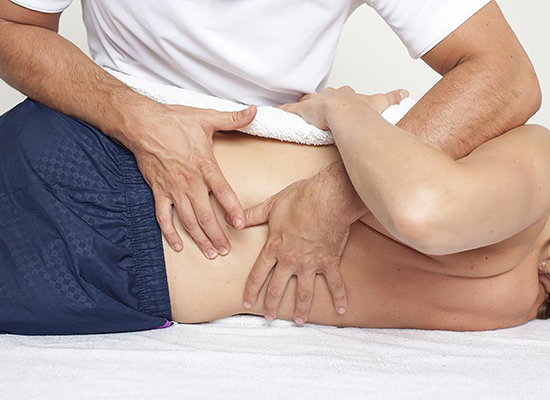
Osteopathy is a manual therapy developed in the United States byDr. Andrew Taylor Still in 1874. It enables the manual diagnosis and treatment of mobility restrictions in various body structures, such as bones, muscles, ligaments, fascia, organs and viscera, which can ultimately lead to functional disorders.
Treatment of the relationship between body structure and function aims not only to restore good mobility to each part of the body, but also to stimulate the body’s ability to heal itself (cell renewal, natural immunity…).
This discipline is gradually establishing itself within the medical profession as a manual medicine in its own right. Developed during a 6-yearuniversity course, graduating practitioners are trained in medical semiology (part of medicine studying clinical symptoms and signs), in-depth physiology and neurophysiology, the complete anatomy of the human body and its biomechanics.
This long training course enables osteopaths to be on the front line*, with a wide range of manual techniques tooffer patients, selected according to their needs and symptom presentation. Each treatment is therefore personalized, unique and tailored to the patient. The start of a session always begins with an anamnesis (medical questioning) to better target and adapt to the person in front of you.
This practice considers the patient as a whole, with the aim of taking preventive as well as curative action.
Osteopathy was founded on principles known as Still’s 5 principles:
- (1) Principle of globality: the individual must be considered as a whole. In other words, we need to consider the patient’s history (past, present, psyche, social environment, as well as his or her activities, profession…) and, above all, not forget that the human body is a collection of elements. These elements are interconnected and continuous, and cannot function independently of one another.
- (2) Principle of structure/function interrelation : there is a permanent interdependence between the structures and functions of the organism. In other words, each function depends on structures, but each structure also depends on functions. A defect in one will inevitably have an impact on the other.
- (3) The “Life is Movement” principle: for physiological laws to apply to all body structures, these structures must be able to mobilize without constraint.
- (4) Principle of self-healing: excluding major traumas (physical or emotional) and with a healthy lifestyle, the body can maintain good health without outside help.
- (5) Principle of the law of the artery: all the body’s circulations must be free and fluid, whether blood, lymph, intra/extra/inter-cellular fluids, the nervous system, etc. The integrity of these systems is an undeniable condition for good health.